


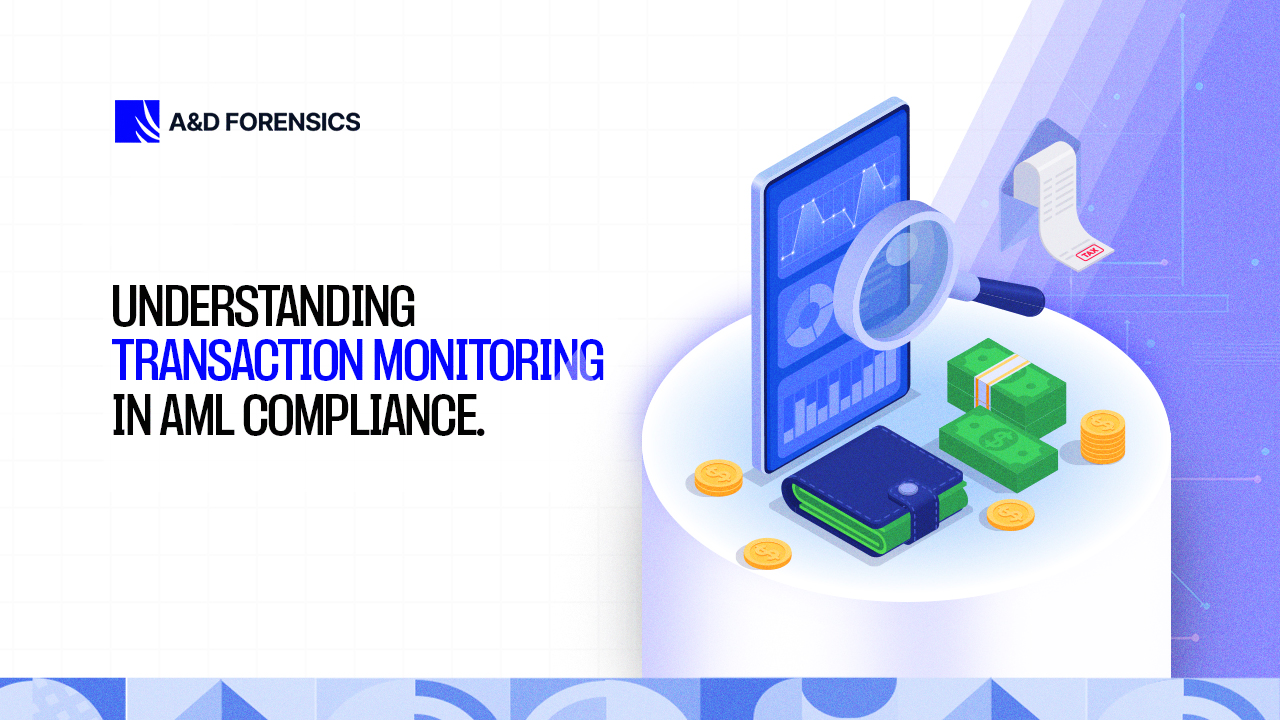

AML compliance depends heavily on effective transaction monitoring, especially as banks and cryptocurrency platforms face increasing pressure to prevent money laundering. Transaction monitoring tracks customer behavior in real time and flags suspicious activities before they escalate into financial crime.
Understanding how transaction monitoring supports AML compliance is essential for organizations operating in today’s complex financial environment. It helps them stay compliant with regulations and manage risk efficiently.
What Transaction Monitoring in AML Compliance Means?
Transaction monitoring in AML compliance is the continuous process of checking and analyzing customer transactions to spot patterns that could indicate money laundering, terrorist financing, or other illegal activities.
According to IBM, transaction monitoring uses AI, machine learning, rule-based systems, and advanced analytics to track transactions and quickly detect suspicious activity. Unlike a one-time review, it monitors financial activity continuously.
The market for AML transaction monitoring is growing rapidly. Feedzai projects it will reach $6.8 billion by 2028, with steady growth at a 17% annual rate since 2023.
How Transaction Monitoring in AML Compliance Works.
Transaction monitoring follows a clear process to identify potential financial crime:
- Data Collection: Systems record key details for every transaction, including amount, time, sender and receiver information, transaction type, and location.
- Analysis: Pre-set rules or machine learning tools review the financial data, flag unusual transactions, create alerts, and support investigations (Sanction Scanner).
- Risk Profiling: Each customer is assigned a risk rating based on factors such as occupation, transaction history, location, and business relationships.
- Alert Generation: Activity that deviates from normal behavior triggers an alert for the compliance team to investigate further.
3 Modern transaction monitoring in AML compliance.
AML Compliance relies on three main detection methods.
- Rule-Based Systems: Flag transactions exceeding thresholds, such as large transfers or multiple small transactions below reporting limits.
- Behavioral Analytics: Detects anomalies by comparing current activity to historical patterns.
- Machine Learning and AI: Continuously improve detection accuracy by learning from past data.
Regulatory Requirements for Transaction Monitoring in AML Compliance.
Transaction monitoring is a key regulatory requirement for financial institutions worldwide:
- Global Standards: The Financial Action Task Force (FATF) mandates ongoing transaction monitoring as part of a risk-based approach to preventing financial crime.
- United States: Requirements come from the Bank Secrecy Act and the USA PATRIOT Act. FinCEN provides guidance for implementation.
- Europe: The Markets in Crypto-Assets (MiCA) regulation and Anti-Money Laundering Authority (AMLA) directives set clear standards, especially for crypto asset service providers.
- According to Quantexa, regulators expect financial institutions to detect and stop money laundering before it enters the legitimate financial system.
6 Importance of Transaction Monitoring In AML Compliance.
Beyond regulatory AML compliance, transaction monitoring offers significant benefits:
- Improved Risk Management: Detect warning signs early, allowing teams to act before losses occur.
- Enhanced Customer Due Diligence: Continuously review behavior and update risk profiles in real time.
- Automatic Detection of Behavioral Changes: Apply closer checks when low-risk customers show unusual activity (SAS).
- Reputation Protection: Prevent compliance gaps that could damage trust.
- Commitment to Financial Crime Prevention: Reinforce confidence with customers and partners by demonstrating strong compliance practices.
- Strong transaction monitoring helps organizations remain compliant, manage risks effectively, and maintain trust in an increasingly complex financial environment.
How A&D Forensics Can Assist Your Firm In Transaction Monitoring in AML Compliance.
A&D Forensics offers comprehensive AML/CFT compliance monitoring services, tailored for blockchain and cryptocurrency businesses. Our team combines expertise in blockchain intelligence, crypto investigations, and transaction monitoring to help you meet international regulatory requirements.
Get in touch with A&D Forensics to learn how our expert transaction monitoring services can protect your organization, ensure compliance, and strengthen trust with your customers and partners in the evolving digital asset space.
Conclusion.
Transaction monitoring in AML Compliance is a critical function for financial institutions and cryptocurrency platforms. As regulations tighten and criminal methods grow more sophisticated, organizations need the right expertise to build and manage effective monitoring programs that prevent financial crime and maintain trust.
Contributor: Ifeoluwa Ademola