


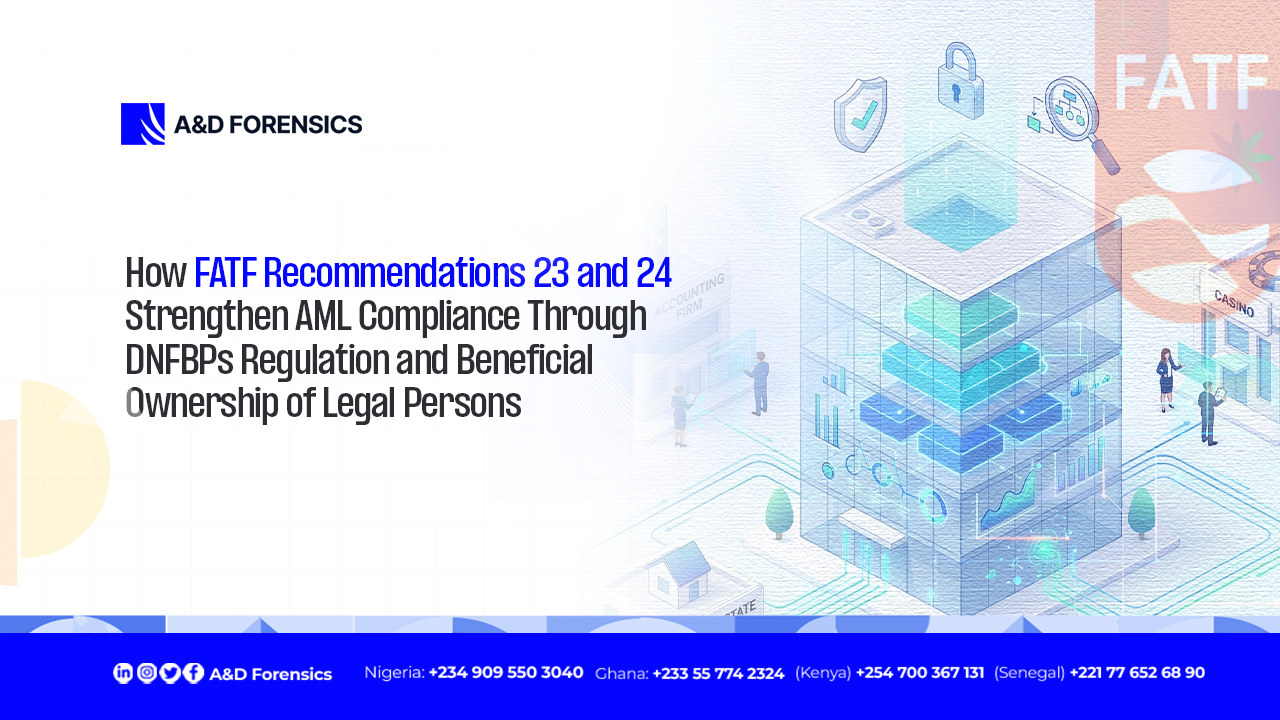

FATF Recommendations 23 and 24 are all about stopping money laundering. They make sure businesses follow the rules and that companies are clear about who really owns them. That way, there are fewer ways for criminals to hide illegal money in the financial system.
Understanding how FATF Recommendations 23 and 24 works through Designated Non-financial Businesses and Professions (DNFBPs) rules and beneficial ownership of legal persons can help your organization stay compliant.
Understanding FATF Recommendation 23: DNFBP Regulation for AML Compliance.
FATF Recommendation 23 is making sure DNFBPs like Casinos, Notaries and Independent Legal professionals play by the same anti-money laundering rules as banks. Basically and according to the FATF, any business or organization that falls into DNFBPs categories, Recommendation 23 says you need to follow the rules in Recommendations 18 to 21, which states its AML Compliance have to meet the global standards.
FATF Recommendation 23 focuses on sectors that criminals often try to exploit, making sure these DNFBPs stick to anti-money laundering rules. According to AML Watcher, in October 2021, the FATF updated Recommendation 23 to make it clear that DNFBPs need to spot, assess, and deal with risks tied to financial crime. Basically, it’s about tightening up AML compliance and leaving less room for shady activity.
How FATF Recommendation 23 Aids AML Compliance
1. Closing Exploitation Gaps: Recommendation 23 closes the gaps that criminals try to exploit in the financial system. By making sure professionals like lawyers and accountants stay alert and report anything suspicious, it stops illegal money from slipping through outside of banks.
2. Extending Suspicious Transaction Reporting: FATF Recommendation 23 makes it clear that reporting suspicious transactions isn’t just for banks. DNFBPs have to spot and report anything unusual, and they also need to do proper customer checks. That way, criminals can’t hide illegal money behind professional services.
3. Implementing Risk-Based Approaches: According to the FATF Explanatory Materials, Recommendation 23 helps strengthen AML compliance by asking DNFBPs to take a risk-based approach. In other words, these businesses and professionals need to actively look out for the specific money laundering risks in their sector, instead of accidentally letting financial happen
4. Requiring Regulatory Supervision: FATF Recommendation 23 tightens up AML regulations. Regulators have to keep a close eye on DNFBPs, checking compliance, running inspections, and penalizing those who don’t follow through. It’s what keeps businesses honest and AML standards actually working.
Understanding FATF Recommendation 24: Beneficial Ownership of Legal Persons in AML Compliance
FATF Recommendation 24 is about knowing who really owns a company. It makes sure criminals can’t hide behind complicated corporate structures to cover up who’s in control of the money. According to the FATF, Recommendation 24 makes sure authorities can access clear, accurate, and up to date information on who really owns a company.
These rules make it far easier to trace who owns a company and prevent money laundering. In March 2022, the FATF tightened them further to close the breaches criminals were using to hide behind anonymous shell companies.
As of now, countries are required to collect and keep clear, up to date information on who really owns and controls a business, making the system more transparent and helping stop illegal money more effectively.
How FATF Recommendation 24 Aids AML Compliance
1. Eliminating Anonymity: FATF Recommendation 24 helps fight money laundering by cutting out the anonymity criminals rely on. By making companies reveal who really owns them, it stops shell companies and complicated corporate setups from being used to hide illegal money.
2.Enabling Meaningful Due Diligence: Recommendation 24 also helps financial institutions and DNFBPs do proper customer checks for AML compliance. It is easier to spot Money Laundering risks and make smarter decisions when one knows who owns and controls a company
3. Supporting Investigations: When authorities investigate money laundering, the beneficial ownership regulations in Recommendation 24 make a big difference. They help trace money through complex company structures, figuring out who’s really behind the transactions, and recover the proceeds of crime.
4. Creating Deterrence: FATF Recommendation 24 also helps prevent crime by acting as a deterrent. When criminals know that ownership rules will expose who they really are, they’re less likely to use companies or complex structures to hide illegal money, which lowers the risk of money laundering overall.
5 Key Impacts of FATF Recommendations 23 and 24 on AML Compliance
- These recommendations take anti-money laundering checks beyond just banks and bring everyday professionals into the mix. Lawyers, accountants, and trust service providers now have to verify their clients and make sure they know who really owns a company. It adds extra checkpoints, making it much harder for criminals to hide or move illegal money.
- When a business falls under Recommendation 23 as a DNFBP, it has to do proper customer checks and find out who really owns or controls a company just like Recommendation 24 says. These recommendations regulations strengthen AML compliance as they make sure the real people behind every business are clearly identified.
- FATF Recommendation 24 ensures information about who really owns a company is collected, kept up to date, and easy to access. This means banks, DNFBPs, and law enforcement can quickly get the ownership details they need, making risk checks and investigations much more effective for AML compliance.
- FATF Recommendation 23 also ensures DNFBPs are properly supervised for AML compliance. They need to meet licensing requirements, go through regular inspections, and face penalties if the rules aren’t followed. This kind of oversight keeps everyone on track and makes sure it’s clear who really owns each company.
- The two recommendations work hand in hand to boost AML compliance. Recommendation 23 makes sure DNFBPs follow anti-money laundering rules, and Recommendation 24 makes them figure out who really owns or controls a business. Working together, these rules form a connected system that closes gaps criminals might try to exploit, making it much harder for illegal money to slip through.
5 Implementation Challenges of FATF Recommendations 23 and 24.
- Many DNFBPs don’t have the same resources or staff that banks dedicate to anti-money laundering efforts. Still, even smaller law firms and accounting practices are expected to comply with the FATF Recommendations 23 and 24.
- DNFBPs also need to stay on top of political and regulatory changes, both locally and internationally. Keeping up and adapting quickly helps them stay compliant and avoid any issues
- Criminals are constantly finding new ways to take advantage of DNFBPs and beneficial ownership rules.To keep up, organizations need to stay alert and adapt quickly to maintain strong AML compliance under FATF Recommendations 23 and 24.
- As digital transactions continue to grow, DNFBPs are facing greater cybersecurity risks. Protecting sensitive financial data from hackers and other online threats has become important l to keeping operations secure.
- Experiencing delays in international legal cooperation make it harder to investigate companies and DNFBPs involved in money laundering.
CONCLUSION
FATF Recommendations 23 and 24 work together to make global AML compliance stronger. They don’t just focus on banks, they make sure companies reveal who really owns them.
Recommendation 23 makes DNFBPs responsible for noticing and reporting anything suspicious, while Recommendation 24 ensures those who really own and control a company are identified. It’s not always easy to put these rules into practice, but together they build a system that makes it much harder for criminals to hide or move illegal money.
Co-Author: Ademola-Adesola Ifeoluwaposimi