



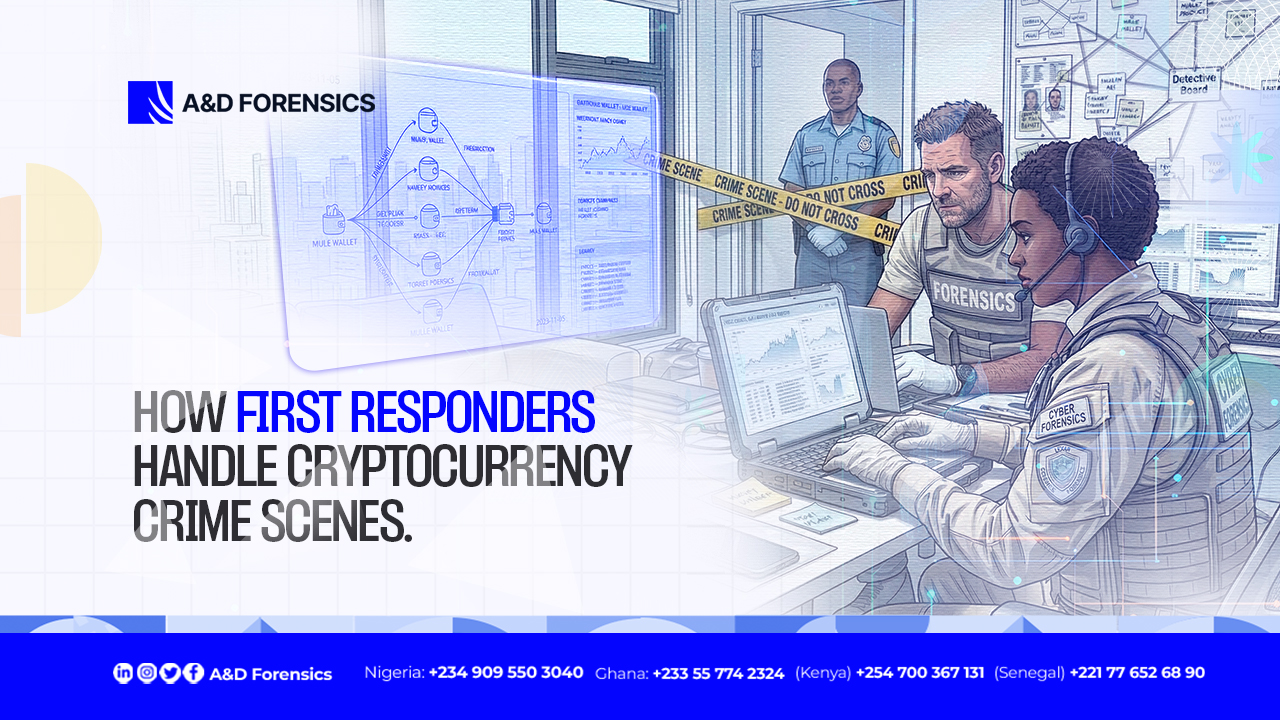

First responders are the first professionals to arrive at the scene. Their actions in those first moments when a suspected crypto related crime takes place such as a ransomware attack, investment fraud, or digital asset theft can determine whether critical digital evidence is preserved or permanently lost.
Unlike traditional crime scenes that focus on physical evidence like guns, cryptocurrency crime scenes often involve digital wallets, electronic devices, private keys, and blockchain related data. If first responders lack the proper training to identify and secure these assets, suspects may move funds instantly across borders or erase key evidence.
Digital evidence is fragile and easily altered, first responders must be trained to recognize, secure, and document cryptocurrency related evidence without compromising the investigation. Proper procedures help ensure that evidence remains intact and admissible in court while protecting potentially recoverable digital assets.
Key Procedures for First Responders in Cryptocurrency Crime Scenes.
- Securing Digital Evidence: First responders must immediately secure all electronic devices, including hardware wallets (e.g., Ledger, Trezor), mobile phones, and computers, as these may contain private keys or access to cryptocurrency.
- Preventing Remote Access: To stop suspects from remotely deleting or transferring funds, devices should be isolated, placed in Faraday bags or disconnected from the internet.
- Locating Sensitive Information: Identify and safeguard critical items like written seed phrases (mnemonic phrases), PINs, and backup codes that provide access to digital wallets.
- Documentation and Chain of Custody: Every crypto-related asset must be carefully documented, including who collected it, when, and how it was secured, ensuring the evidence remains legally admissible.
- Use of Specialized Tools: When available, employ blockchain analysis tools (e.g., Chainalysis, TRM Labs) to trace transaction histories and identify wallet connections, supporting the investigative process.
Essential Training Standards for First Responders in Cryptocurrency Investigations
Below are the minimum training standards first responders should possess when handling cryptocurrency crime scenes.
1. Cryptocurrency & Blockchain Fundamentals: Before investigating crypto-related crimes, first responders must understand the basic principles of cryptocurrency and blockchain technology. Cryptocurrencies operate on decentralized blockchain networks where transactions are permanently recorded and publicly verifiable. Understanding how blockchain transactions work helps first responders identify wallet addresses, transaction histories, and potential links between suspects and digital assets.
2. Hardware & Software Wallet Identification: At cryptocurrency crime scenes, first responders must be able to identify the different forms in which digital assets are stored. Cryptocurrency wallets may appear in several forms, including: Hardware wallets (physical devices that store private keys), Software wallets on mobile phones or computers, Exchange accounts and custodial wallets and Paper wallets or seed phrases written on paper.
3. Evidence Collection from Electronic Devices: Cryptocurrency investigations typically involve multiple electronic devices that may contain digital evidence. When arriving at a crypto-related crime scene, first responders must carefully identify and secure devices such as: Mobile phones, Laptops and desktop computers, External hard drives and USB devices and Cryptocurrency hardware wallets. INTERPOL’s guidelines also establish best practices for handling and using digital evidence during search and seizure stages, with key technical considerations for the effective preservation of data to ensure it can support law enforcement in criminal investigations and be admissible in court.
4. Chain of Custody for Digital Assets: Maintaining the chain of custody is essential when handling cryptocurrency-related evidence. From the moment first responders identify a wallet, device, or seed phrase, every step must be carefully documented. This includes: who discovered the evidence, when it was collected, how it was secured and who accessed it afterward. NIST IR 8387 specifically addresses cryptocurrency as a digital object that may become evidence, noting that access to such assets is controlled by an authentication mechanism such as a username, password, or cryptographic key, and that a major distinction exists between assets that can be frozen by an organization and those that cannot.
5. Asset Preservation & Secure Transfer Protocols: One of the biggest challenges in cryptocurrency investigations is that digital assets can be transferred instantly across the world. For this reason, first responders must understand how to preserve cryptocurrency assets when authorized by law. This may involve securing wallet credentials or transferring funds into an official investigative wallet controlled by law enforcement. Proper asset preservation procedures help prevent permanent loss of cryptocurrency and maintain evidence integrity during the investigation.
6. Legal Considerations for Digital Asset Seizure: Handling cryptocurrency during an investigation also involves important legal considerations. Before seizing digital assets or accessing electronic devices, first responders must understand the legal authority required for such actions. This may include warrants, jurisdictional approvals, or other legal documentation depending on the country or investigative framework.
The Importance of Training for Crypto Crime Response.
As cryptocurrency adoption continues to grow globally, first responders are increasingly encountering crimes involving digital assets. However, without adequate training, investigators risk:
- losing critical digital evidence
- mishandling cryptocurrency wallets
- allowing suspects to transfer funds before seizure
- weakening legal cases during prosecution
- Strengthening the technical capacity of first responders ensures that law enforcement agencies can respond effectively to crypto enabled crime while protecting digital evidence and recoverable assets.
Challenges for First Responders in Cryptocurrency Crime Scenes.
- Rapid Asset Movement: Cryptocurrency can be transferred globally in seconds, risking permanent loss.
- Identifying Digital Evidence: Crypto evidence is often hidden in devices, apps, or written notes, making it easy to overlook.
- Preserving Data Integrity: Electronic evidence can be easily altered or erased if not handled properly.
- Legal and Jurisdictional Complexities: Accessing wallets or seizing digital assets may require warrants or cross-border authority.
- Technical Knowledge Gaps: First responders may lack sufficient blockchain or cryptocurrency expertise, which can hinder investigations.
CONCLUSION
The growing role of cryptocurrency in financial crimes demands a new level of preparedness from first responders. Their ability to quickly recognize, secure, and preserve digital evidence can make the difference between a strong case and a lost opportunity.
With the right training, tools, and adherence to proper procedures, first responders can protect critical evidence, prevent the movement of illicit funds, and support successful investigations. As the threat landscape continues to evolve, strengthening these capabilities will remain essential to effectively combating crypto-enabled crime.