


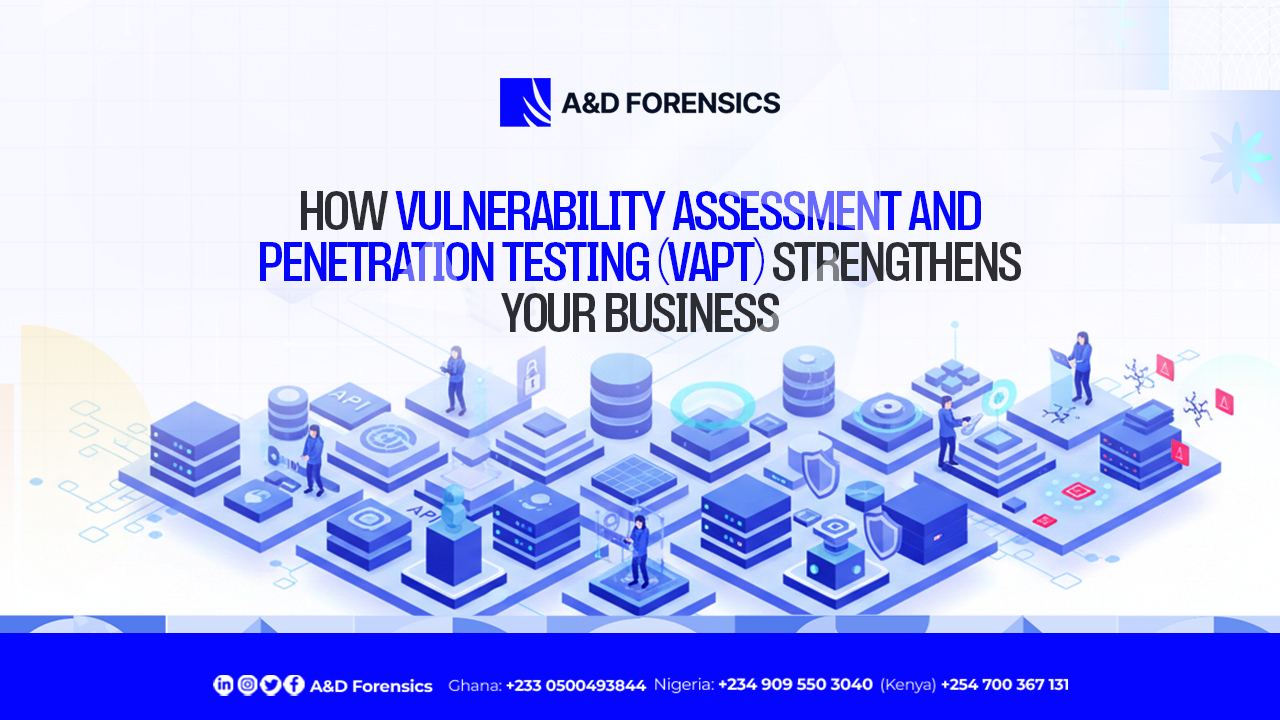

Vulnerability Assessment and Penetration Testing (VAPT) is a critical cybersecurity practice that helps businesses identify, assess, and remediate weaknesses in their information technology (IT) infrastructure before attackers can exploit them. As businesses increasingly rely on digital systems to operate, store sensitive data, and deliver services, security threat has grown more complex and dangerous. Cyberattacks happen often and can be extremely costly, and can lead to serious financial losses.
Vulnerability Assessment and Penetration Testing (VAPT) is a proactive approach used to secure your digital assets, which ensures potential threats are detected and mitigated before they can cause harm.
2 Pillars of Vulnerability Assessment and Penetration Testing (VAPT).
Vulnerability Assessment and Penetration Testing (VAPT) consists of two complementary components, which address security from a different angle:
- Vulnerability Assessment (VA): Vulnerability Assessment is a systematic process of scanning and analyzing systems, networks, and applications to identify known weaknesses. These include:
- Outdated or unpatched software
- Misconfigured servers or databases
- Weak authentication mechanisms
- Insecure network services
The primary objective of a vulnerability assessment is to create a comprehensive inventory of potential risks, prioritize them based on severity, and provide actionable recommendations to reduce exposure before attackers exploit them.
- Penetration Testing (PT): Penetration Testing takes the next step by simulating real-world attacks on your systems. Instead of just identifying weaknesses, penetration testing actively exploits vulnerabilities to determine:
- How far an attacker could penetrate
- What sensitive data or systems could be accessed
- Whether existing security controls can detect or stop an attack
Penetration Testing is a realistic assessment of your organization’s security posture, which helps businesses understand both technical risks and practical impact of potential breaches.
While a vulnerability assessment identifies “what’s” potential weaknesses, penetration testing shows “so what’s” real-world impact if those weaknesses are exploited. Combining both pillars gives organizations a complete and actionable view of their cybersecurity posture, enabling proactive mitigation and stronger defenses.
How Vulnerability Assessment and Penetration Testing (VAPT) Benefits Your Business.
1. Proactive Risk Identification: VAPT helps you detect weaknesses before attackers, by identifying vulnerabilities early, you can easily patch critical gaps and prevent potential breaches before these vulnerabilities impact your business.
2. Regulatory Compliance: If your industry is regulated by standards like PCI DSS, GDPR, HIPAA, or ISO 27001, VAPT ensures your systems meet these requirements. This helps you avoid penalties and strengthens trust with your stakeholders.
3. Enhanced Incident Response: Penetration tests simulate let you see how well your team can detect and respond. These insights help you refine your incident response plans for faster, more effective reactions to actual threats.
4. Reduced Financial Risk: A single data breach can cost you significantly through fines, legal fees, reputational damage, and operational downtime. VAPT helps you minimize these risks by addressing vulnerabilities proactively.
5. Builds Trust and Reputation: By conducting regular VAPT, you show your clients, partners, and investors that you take cybersecurity seriously. This builds confidence and strengthens your brand’s reputation.
6. Protects Your Intellectual Property: If you have valuable proprietary data or intellectual property, VAPT ensures your critical assets remain secure from cybercriminals and industrial espionage.regular, independent testing that protects client data. The message shifts from “we provide a service” to “we provide a secure and reliable service.”
How does VAPT Work?
A VAPT engagement follows a structured approach designed to uncover, validate, and reduce security risks across your environment:
- Scope Definition: Identify the systems, networks, and applications to be tested.
- Vulnerability Scanning: Use automated tools to detect known security gaps.
- Manual Analysis: Security experts validate findings and prioritize risks.
- Penetration Testing: Simulate attacks to assess exploitability and potential impact.
- Reporting: Deliver a detailed report with vulnerabilities, risk ratings, and remediation recommendations.
- Remediation Support: Provide guidance on fixing vulnerabilities and verifying solutions.
How Can A&D Forensics Help?
A&D Forensics helps you identify and reduce cyber risks through expert-led Vulnerability Assessment and Penetration Testing (VAPT). We uncover security gaps, simulate real-world attacks, and provide clear, actionable remediation guidance to strengthen your systems, support compliance, and protect your business.
Conclusion.
Vulnerability Assessment and Penetration Testing (VAPT) is more than just a technical exercise, it’s a strategic investment in your business’s security, resilience, and reputation. By uncovering vulnerabilities, validating defenses, and enhancing response readiness, VAPT ensures your organization is prepared for today’s complex cyber threats. Businesses that prioritize VAPT not only protect their systems and data but also reinforce customer trust, regulatory compliance, and long-term growth.
Contributor: Danladi Galadima